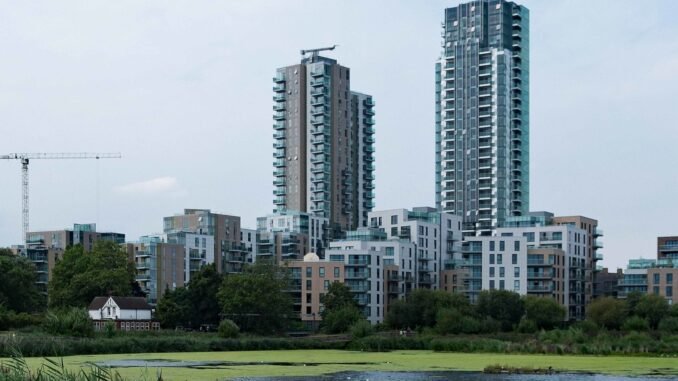
Hackney Council has begun work on a new Local Plan. It will replace the current plan (known as LP33, adopted in 2020) and will shape what gets built across the borough, where and at what height, for the next fifteen years. The first round of consultation is open now and closes on Monday 2 November 2026.
WDCO intends to submit a response on behalf of the estate. For that response to carry any weight, it needs to reflect what residents actually think rather than what the board supposes they think. This post explains, as briefly as the subject allows, what is being asked and where Woodberry Down fits in, and then asks you some questions.
What this stage is, and what it is not
This is a scoping consultation. The council is not yet proposing policies or naming sites; it is asking what the plan’s priorities should be and how people should be consulted as it develops. The detail follows later:
| Stage | When |
|---|---|
| Scoping: priorities and how to engage people | 14 September – 2 November 2026 |
| Content, evidence, sites and policy options | April – May 2027 |
| Full draft Local Plan | May – June 2028 |
| Public examination by a government inspector | Early 2029 |
| Adoption | April 2029 |
It would be easy to conclude that a scoping stage is too early to matter. The opposite is closer to the truth. The priorities set now determine what evidence the council commissions and which questions it asks in 2027 and 2028. Matters that are not raised at this stage have a habit of not appearing later.
Where Woodberry Down fits
The consultation divides the borough into nine areas, one of which is Manor House and Woodberry Down. For each area the council asks two things: what residents value most about their neighbourhood, and what needs to improve or change. This is the part of the consultation where an estate-level response is most useful, and it is where WDCO most wants your views.
Several borough-wide themes also bear directly on the estate:
- Affordable housing. The current plan requires 50% affordable housing on new schemes, and the council says it has been resisting pressure from the Greater London Authority to reduce this to 20%. It describes social rent as the priority tenure. Woodberry Down is a special case in that there are long standing agreements in place between the development partners.
- Taller and denser buildings. The council expects some areas to take taller, denser development, and an update of its local character study will look at where tall buildings could go.
- Community facilities. The council acknowledges that social infrastructure has to be planned alongside new homes, not after them, and wants to bring libraries, health, education and community services together into shared hubs.
- “Who Owns Hackney?” A new council investigation into land ownership and community access to buildings — including community land trusts, community right to buy, and wider use of council-owned space by voluntary groups — is expected to feed into planning policy.
- Green space, trees and water. Hackney has the lowest proportion of homes with gardens of any London borough, and tree cover below the London average. The council also flags overheating, flood risk and water supply.
- Shops and local centres. Finsbury Park is classed as a district centre. Planning changes since 2020 allow many high-street uses to change without permission, which has reduced the council’s control over what our local parades become.
- Hotels and short-term lets. The consultation names Seven Sisters Road as one of the borough’s concentrations of hotels, and notes that short-term lets can remove homes from residential use.
- Transport and streets. The council recognises that some streets remain unsafe or unattractive, and that the network is hard to navigate for disabled people, children and those on low incomes.
A point about who gets heard
The council itself observes that planning consultations tend to be dominated by developers, landowners and “a small set of well-resourced community organisations”. WDCO would rather not be the only voice from Woodberry Down, and it would rather not be a voice that speaks without having asked. Hence this post.
What we would like to know
Answer as many or as few of these as you wish. Short answers are entirely welcome.
- What do you value most about living on or near Woodberry Down? What should the plan protect?
- What most needs to improve or change? Think of the next fifteen years, not only the next fifteen months.
- Which three priorities matter most to you? The council offers: more and genuinely affordable homes; jobs and skills; affordable workspace and local business; shops, markets and town centres; community facilities; climate and sustainable buildings; green space and nature; air quality and noise; walking, cycling and public transport; design and local character; health and reducing inequalities. You may name something not on the list.
- Housing. Woodberry Down will continue to be a major contributor to housing provision in Hackney.
- Height and density. How do you feel about the height and density of what has been built so far? What should the plan say about it in future?
- Community space. Are there facilities the estate lacks, or buildings you would like residents to have more say over or access to?
- Green space and the reservoirs. What would you want the plan to say about parks, trees, the reservoirs and the New River?
- Shops and services. What is missing locally, and what would you not want to lose?
- Getting about. Which streets, crossings or routes feel unsafe, inaccessible or poorly connected?
- Being consulted. How would you prefer the council to reach you at the next two stages — events, paper surveys, online, through WDCO, in languages other than English? What has worked, or failed, in the past?
How to reply to WDCO
Please send your views by Friday 23 October 2026, which leaves the board time to draft and agree a response before the council’s deadline.
- Send an email to planning@wdco.org.uk
- Write down or print out your comments and put them in the letterbox in the WDCO offices.
We will not publish individual comments with names attached. The response WDCO submits will be posted on this website once it has been sent.
Responding to the council yourself
WDCO’s response is no substitute for your own, and the council counts individual responses. You can respond directly by any of the following, up to 2 November:
- Online survey: bit.ly/HIYlocalplan. It is in three parts — policy themes, suggesting sites, and a short top-priorities form — and you can answer as few questions as you like.
- Email: planmaking@hackney.gov.uk, with “Local Plan Consultation” in the subject line.
- Paper survey: available, with a paper copy of the consultation document, at every Hackney library. Hand completed forms to library staff.
- Drop-in events are being held at libraries across the borough; dates are on the consultation website.
The council is also running a separate call for sites, at bit.ly/call_for_sites, in which anyone may suggest land for housing, employment or community use. If you know of a site in or near the estate that you believe should be considered — or protected — this is the place to say so.
Photo © Copyright Jim Osley and licensed for reuse under a cc-by-sa/2.0 Creative Commons Licence.
It is vital that the council commits to co-locating social infrastructure like health centres and libraries in tandem with the delivery phases, rather than treating them as afterthoughts once density increases. Given that Hackney is actively resisting GLA pressure to drop the affordable housing target from 50% to 20%, WDCO should strongly push for enforceable milestones so that existing developer agreements on the estate do not slip. How will the scoping response ensure that the community land trust model is formally integrated into the upcoming local character study?