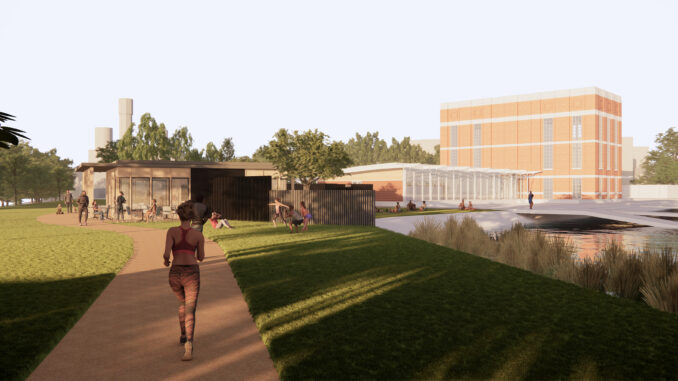
The West Reservoir has long been just a little bit inaccessible. That is about to change. A major redevelopment is nearly complete, and next month ( May 2026) the site will have a new café, improved changing rooms, better access routes, 2 new bridges, and a more open relationship with the neighbourhood around it.
This is not a cosmetic tidy-up. It is a substantial public investment, with the current phase of work costing £3.5 million and the wider programme over several years bringing the total to roughly £7.3 million. The point is not simply to make the place look smarter. The aim is to make it more accessible, more inclusive, and much more attractive. to a wider range of local people.
We have written about this before.
What the consultation said
In 2023, 794 residents were consulted. Forty-one per cent of those who did not currently use the reservoir said the proposed changes would encourage them to start. That is an encouraging number. There was also significant pushback — 61 per cent disliked certain build elements. The consultation was thorough enough to reach the Friends of Woodberry Down Over-50s group by paper survey, specifically because the council recognised that digital exclusion was a real barrier. Whether the finished result wins over the sceptics is something we will be able to judge from May onwards.
What is being built
The most visible part of the current phase is the new café and reception area, together with flexible village-style changing rooms and improved outdoor facilities. There are also new pathways, landscaping, and a stronger connection to the Woodberry Down Estate and to Green Lanes. The project also includes a new beginner-friendly open water swimming area, outdoor showers, and a pontoon pool tank designed to make swimming safer and easier to manage.
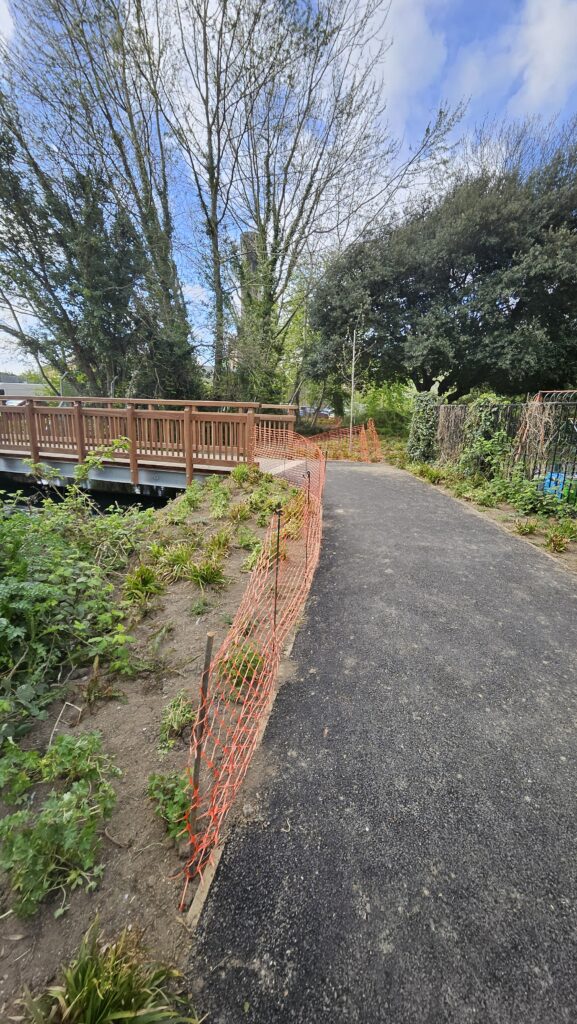
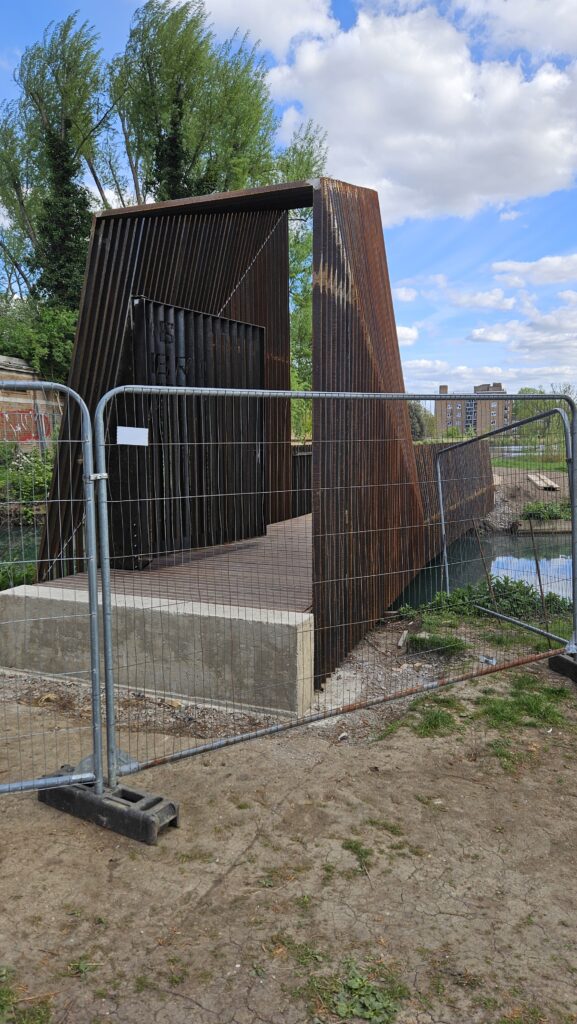
A pair of accessible footbridges is central to the scheme. They are meant to remove one of the most obvious barriers to the site: the old layout, which made it difficult for wheelchair users, people with mobility aids, and parents with prams to move around the reservoir perimeter. That is a practical improvement, but also a symbolic one. The reservoir will feel like a place people can circulate through, not a destination reached by negotiation.
Where the money came from
The funding has been assembled in the familiar way that good local projects often are: patiently, over time, from several different pots. Hackney Council’s own capital investment is one part of it, but the project also includes £1.6 million from developer contributions and £700,000 from the Greater London Authority’s Green and Resilient Spaces Fund. Earlier phases brought additional money in 2021 and 2022, including a £1.5 million refurbishment round and further spending on amenities and green space.
That matters because it tells you what the project is trying to do. Section 106 money, in particular, is intended to mitigate the impact of development and support local benefits that are directly related to it. In plain English, if a neighbourhood grows, some of the gain should be put back into the things that make that neighbourhood liveable. West Reservoir is one example of that logic in action,
Why accessibility matters
The Equality Impact Assessment behind the project is doing the sort of work that ought to be routine, though often is not. It identifies the obstacles that kept some people away before: steps on the bridge, limited access around the perimeter, and the general impression that open water swimming is only for the already confident. The redevelopment responds by trying to remove those barriers one by one.
That includes a level walking route around the reservoir, better changing provision, and a dedicated space for beginners. It also includes outreach to people who are often left out of consultation exercises, including older residents and those who may not engage easily online. This is the sensible part of the story. If a public facility is genuinely public, then it should be designed for people who do not already find it easy to use.
The green side of the project
There is more here than access and leisure. The project will improve biodiversity and strengthen the site’s environmental performance. New reedbeds and wildflower meadows are part of the plan, alongside wider landscaping and green infrastructure. Solar panels were installed in 2020, and a water source heat pump followed in 2022, so the current works build on an existing shift towards lower-carbon operation.
That matters because the reservoir must not just be a sports facility. It is an open-water landscape, and the best improvement projects understand that the two things should be complementary. . Better planting, better drainage, better walking routes, and better habitat are not decorative extras. They shape how the place works, how long people stay, and whether the site feels cared for rather than merely maintained.
Who is delivering it
The work is being delivered by a specialist team With contractors Blakedown Landscapes, with Pick Everard acting as project manager, Pringle Richards Sharratt as architect, and LUC as landscape architect. Better Leisure is also involved in keeping the site operational during the phased works. That is not a minor point. Managing a live site while building major new facilities around it is difficult, and the fact that the centre has remained open speaks well of the coordination involved.
By early 2026, the structure for the new café and foundations for the swimming changing rooms were already in place. The expected timetable points to March 2026 for the footbridges, April for the café and changing rooms, and May 2026 for final landscaping and the formal reopening. These dates may shift slightly, as dates in building projects sometimes do, but the direction of travel is clear enough.
What this should achieve
The best argument for the project is accessibility and inclusion. £7.3 million is a substantial sum. It should be that the reservoir will become a place more people can use, more often, and in more ways. When the new paths really do make movement easier, the beginner swimming area draws in people who never thought the site was for them, and when the green space genuinely feels open rather than fenced off, then the project will have done its job.
The risk, of course, is that large capital projects sometimes promise public benefit and then deliver only slightly improved branding. But the ingredients here look better than that. There is a clear connection between the investment and the barriers it is meant to remove. There is also a proper understanding that access, ecology, leisure, and community value belong together.
Woodberry Down’s stake in this
WDCO has been tracking this project for some time, and the connection is closer than proximity might suggest. The Section 106 funding that contributed to the 2022 phase came directly from the Woodberry Down development. The Equality Impact Assessment explicitly identifies residents of the estate as a target group who should benefit as much as the wider swimming community. The new free-to-access green spaces on the east side — not a pay-to-play facility — were designed partly with that intention.
The project has been long in the making. Solar panels went in during 2020. A water source heat pump followed in 2022. The structural frame for the new café and foundations for the changing rooms were in place by early 2026.
May is close at hand.
For WDCO and for local residents, the West Reservoir redevelopment is worth watching come to fruition because it is about more than a building scheme. It is about whether one of Hackney’s most distinctive places can become less hidden, more generous, and easier to share. That would be a splendid outcome.
We will report back when we have walked the paths and crossed the bridges.
Leave a Reply